前言
ahooks算是react hooks生态库重要的一环,其中useRequest算是使用比较多的hooks。(试问哪个前端页面没有http请求)
useRequest的自我介绍
useRequest 是一个强大的异步数据管理的 Hooks,React 项目中的网络请求场景使用 useRequest 就够了。
useRequest 通过插件式组织代码,核心代码极其简单,并且可以很方便的扩展出更高级的功能。目前已有能力包括….
主要是第二句:useRequest的核心代码很简单,其他什么防抖、节流都是通过插件实现的。
代码分层
带着上一节的官方介绍来看useRequest的代码分层
入口文件
1
2
3
4
5
6
7
8
9
10
11
12
13
14
15
16
17
18
| function useRequest<TData, TParams extends any[]>(
service: Service<TData, TParams>,
options?: Options<TData, TParams>,
plugins?: Plugin<TData, TParams>[],
) {
return useRequestImplement<TData, TParams>(service, options, [
...(plugins || []),
useDebouncePlugin,
useLoadingDelayPlugin,
usePollingPlugin,
useRefreshOnWindowFocusPlugin,
useThrottlePlugin,
useRefreshDeps,
useCachePlugin,
useRetryPlugin,
useReadyPlugin,
] as Plugin<TData, TParams>[]);
}
|
useRequest接收service、options、plugin三个参数,随后又调用了useRequestImplement函数,参数为service、options,plugins变成自定义plugins与内置plugins的集合。
其中service是一个返回promise的函数,也就是封装http request的函数。options则是一个参数大集合,除了 base option 以外,还包括内置插件的options。
从这里其实印证了官方的说法:useRequest的核心功能简单,其他的功能都是插件实现的(包括内置插件与自定义插件)。扒一扒useRequestImplement的源码,看看大佬所说的简单到底有多简单。
useRequestImplement
1
2
3
4
5
6
7
8
9
10
11
12
13
14
15
16
17
18
19
20
21
22
23
24
25
26
27
28
29
30
31
32
33
34
35
36
37
38
39
40
41
42
43
44
45
46
47
48
49
50
51
52
53
54
55
56
57
| function useRequestImplement<TData, TParams extends any[]>(
service: Service<TData, TParams>,
options: Options<TData, TParams> = {},
plugins: Plugin<TData, TParams>[] = [],
) {
const { manual = false, ...rest } = options;
const fetchOptions = {
manual,
...rest,
};
const serviceRef = useLatest(service);
const update = useUpdate();
const fetchInstance = useCreation(() => {
const initState = plugins.map((p) => p?.onInit?.(fetchOptions)).filter(Boolean);
return new Fetch<TData, TParams>(
serviceRef,
fetchOptions,
update,
Object.assign({}, ...initState),
);
}, []);
fetchInstance.options = fetchOptions;
fetchInstance.pluginImpls = plugins.map((p) => p(fetchInstance, fetchOptions));
useMount(() => {
if (!manual) {
const params = fetchInstance.state.params || options.defaultParams || [];
fetchInstance.run(...params);
}
});
useUnmount(() => {
fetchInstance.cancel();
});
return {
loading: fetchInstance.state.loading,
data: fetchInstance.state.data,
error: fetchInstance.state.error,
params: fetchInstance.state.params || [],
cancel: useMemoizedFn(fetchInstance.cancel.bind(fetchInstance)),
refresh: useMemoizedFn(fetchInstance.refresh.bind(fetchInstance)),
refreshAsync: useMemoizedFn(fetchInstance.refreshAsync.bind(fetchInstance)),
run: useMemoizedFn(fetchInstance.run.bind(fetchInstance)),
runAsync: useMemoizedFn(fetchInstance.runAsync.bind(fetchInstance)),
mutate: useMemoizedFn(fetchInstance.mutate.bind(fetchInstance)),
} as Result<TData, TParams>;
}
|
上面一波粗略的阅读虽然遇到了6个旁支,但是根据变量的命名以及官方文档我们可以猜一猜useRequestImplement都干了什么事。
useLatest
useUpdate
useCreation
useMount
useUnmount
useMemoizedFn
通过文档可以看出useLatest的作用是返回某个参数的最新值,useCreation的作用是使某个值保持绝对不变(除非依赖发生变化),useMemoizedFn的作用是使函数的地址永远不变。这三个都属于性能优化hook,对于我们理解useRequest可以暂时忽略。
而useUpdate,顾名思义,返回一个强制刷新的函数,用于整个组件树重新渲染。
useMount与useUnmount属于生命周期hook,分别在组件挂载与卸载时触发。
综上,useRequestImplement做的事其实就是,通过new Fetch生成一个fetchInstance实例,参数除了serviceRef、fetchOptions、update外,还有initState。瞅一眼initState。
1
| const initState = plugins.map((p) => p?.onInit?.(fetchOptions)).filter(Boolean);
|
1
2
3
4
5
6
7
| export type Plugin<TData, TParams extends any[]> = {
(fetchInstance: Fetch<TData, TParams>, options: Options<TData, TParams>): PluginReturn<
TData,
TParams
>;
onInit?: (options: Options<TData, TParams>) => Partial<FetchState<TData, TParams>>;
};
|
从这两处可以看出每个plugin都可以有个onInit函数,返回值是部分FetchState对象,这个对象的集合就是initState。 瞅一眼Fetch的构造函数。
1
2
3
4
5
6
7
8
9
10
11
12
| constructor(
public serviceRef: MutableRefObject<Service<TData, TParams>>,
public options: Options<TData, TParams>,
public subscribe: Subscribe,
public initState: Partial<FetchState<TData, TParams>> = {},
) {
this.state = {
...this.state,
loading: !options.manual,
...initState,
};
}
|
可以看出,onInit的作用其实就是在初始化fetchInstance时,通过插件的形式生成initState,initState会在new Fetch时作为state的默认值。
回到主线,生成fetchInstance实例后,会在fetchInstance上放一些东西。
1
2
3
4
| fetchInstance.options = fetchOptions;
fetchInstance.pluginImpls = plugins.map((p) => p(fetchInstance, fetchOptions));
|
PluginReturn
pluginImpls其实就是一个含有onBefore、onRequest…等生命周期函数的对象集合。而这些生命周期就是插件系统的灵魂。Fetch内部通过一个叫runPluginHandler的函数调用各个插件(pluginImpls)。
大概瞅一眼runPluginHandler 的实现
1
2
3
4
| runPluginHandler(event: keyof PluginReturn<TData, TParams>, ...rest: any[]) {
const r = this.pluginImpls.map((i) => i[event]?.(...rest)).filter(Boolean);
return Object.assign({}, ...r);
}
|
我们看Fetch内部都在什么时机调用runPluginHandler。
runAsync
cancel
mutate
runAsync方法会在请求的各个阶段调用runPluginHandler(请求前/中/后…),onBefore/onRequest/onSuccess…,而这些钩子函数或者直接干预runAsync的执行,或者通过返回约定的值 来干预runAsync的执行。
总的来说,所谓的插件就是一个返回PluginReturn的函数,而PluginReturn中的各个生命周期函数会在Fetch的关键方法执行时调用。
这就是插件的工作原理,我们也可以写插件来执行上述过程。
回到主线。在组件挂载时执行fetchInstance.run()(假设manual为false),组件卸载时执行fetchInstance.cancel(),然后返回一大堆fetchInstance的属性/方法。
旁支
Fetch类
用面向对象的思维封装了useRequest关于网络请求的几个api,在这里插一句话,我以前不重视面向对象那一套东西,其实在某些场景下,面向对象的可封装性与代码的可读性是优于函数式编程的,配合typescript的类型系统写起来不要太爽。
Fetch洋洋洒洒150+代码,从run函数开刀。
1
2
3
4
5
6
7
| run(...params: TParams) {
this.runAsync(...params).catch((error) => {
if (!this.options.onError) {
console.error(error);
}
});
}
|
run函数调用了runAsync函数。那run与runAsync有啥区别呢,文档是这样写的。
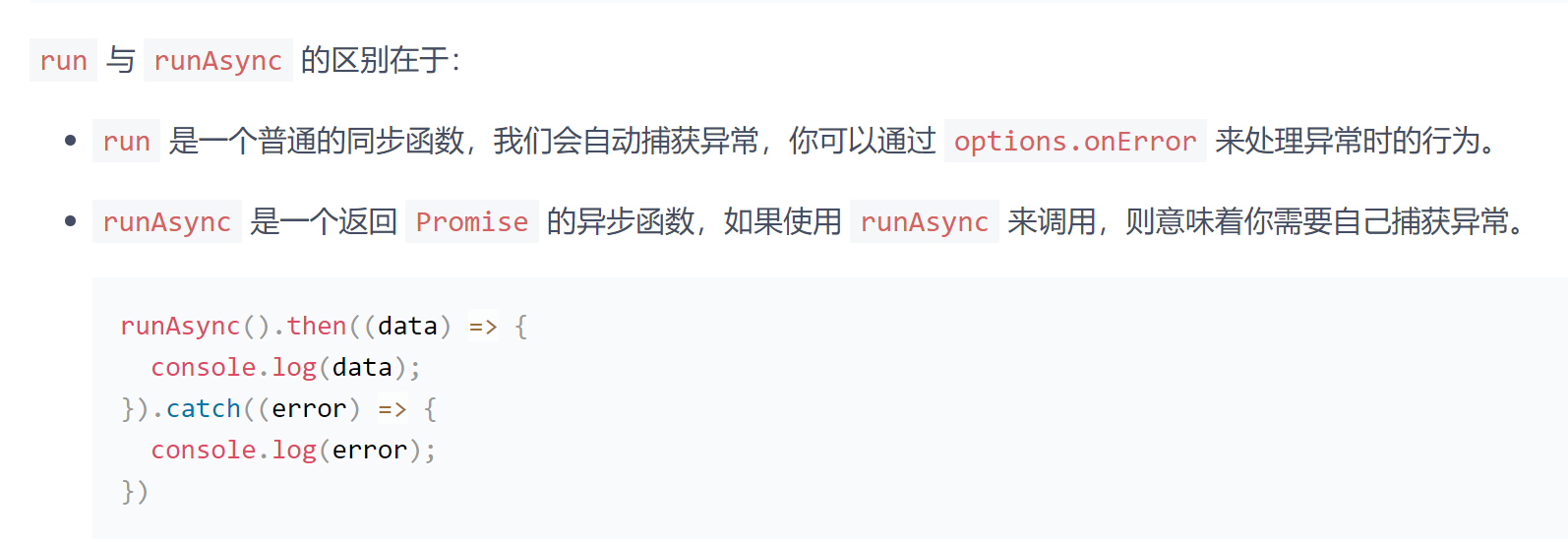
这句话具有误导作用,runAsync本质上是个async函数.
onSuccess
resolve
onError
reject
代码很清晰,run调用了runAsync,后者在执行过程中不管是options里面的success/error,还是promise形式的resolve/reject都会执行。
而整个runAsync的执行过程分为三部分,请求前/中/后。
请求前:
1
2
3
4
5
6
7
8
9
10
11
12
13
14
15
16
17
18
19
20
21
22
23
24
25
26
| this.count += 1;
const currentCount = this.count;
const {
stopNow = false,
returnNow = false,
...state
} = this.runPluginHandler('onBefore', params);
if (stopNow) {
return new Promise(() => {});
}
this.setState({
loading: true,
params,
...state,
});
if (returnNow) {
return Promise.resolve(state.data);
}
this.options.onBefore?.(params);
|
可以先忽略那个奇怪的count,还是挺简单的,先是调用了所有插件的onBefore钩子。如果stopNow === true,返回一个空的promise,否则调用setState设置params和loading,这里的setState和react的setState是雷锋和雷峰塔的关系。
setState
1
2
3
4
5
6
7
| setState(s: Partial<FetchState<TData, TParams>> = {}) {
this.state = {
...this.state,
...s,
};
this.subscribe();
}
|
调用了一个奇怪的subscribe函数,这个subscribe就是Fetch实例化时传入的update函数(useUpdate),目的是使组件rerender,让react组件拿到最新的Fetch成员变量。
回到runAsync主线。如果returnNow === true,返回空的promise,与前一步骤不同的是,这时的loading是true。然后调用options的onBefore函数,说明插件的onBefore是先于options.onBefore执行的,并且可以干预是否执行options.onBefore。
请求中与请求后分别对应try/catch代码块,暂且忽略count,先调用插件的onRequest钩子,请求可以在插件中发起,假如插件没有返回servicePromise或者没有请求,runAsync会自己执行server,请求完成以后设置state,调用options.onSuccess,插件的onSuccess钩子,options.onFinally。
请求后与请求中思路类似,就不重复了。回过头来看那个count发现除了runAsync,cancel也访问了count,从这里大概能猜到,runAsync中之所以有那么多currentCount与count的比对,目的就是检测请求有没有被取消(并不会真正的取消那条请求)
剩下的refresh、refreshAsync与mutate,前两个就不说了,来看mutate 的实现。
1
2
3
4
5
6
7
8
9
10
11
12
13
| let targetData: TData | undefined;
if (typeof data === 'function') {
targetData = data(this.state.data);
} else {
targetData = data;
}
this.runPluginHandler('onMutate', targetData);
this.setState({
data: targetData,
});
|
代码很清晰,所做的事就是不调用server直接setState(data),顺便调用插件的onMutate钩子,从代码来看,data还可以是个函数。
hooks
useLatest
useLatest
简简单单几行代码,道不出这个hooks的真谛,我们来看官方例子 。
1
2
3
4
5
6
7
8
9
10
11
12
13
14
15
16
17
18
19
20
21
| import React, { useState, useEffect } from 'react';
import { useLatest } from 'ahooks';
export default () => {
const [count, setCount] = useState(0);
const latestCountRef = useLatest(count);
useEffect(() => {
const interval = setInterval(() => {
setCount(latestCountRef.current + 1);
}, 1000);
return () => clearInterval(interval);
}, []);
return (
<>
<p>count: {count}</p>
</>
);
};
|
把useLatest去掉
jsx1
2
3
4
5
6
7
8
9
10
11
12
13
14
15
16
17
18
19
20
21
| import React, { useState, useEffect } from 'react';
import { useLatest } from 'ahooks';
export default () => {
const [count, setCount] = useState(0);
useEffect(() => {
const interval = setInterval(() => {
setCount(count+1)
}, 1000);
return () => clearInterval(interval);
}, []);
return (
<>
<p>count: {count}</p>
</>
);
};
|
可以自己用codesanbox运行运行一下这段代码,会发现jsx中count的值永远都是1。为什么会这样呢?这是因为每次setInterval在触发回调时,这个回调函数的地址都是一样的,也就是说每次调用的回调函数都是同一个,一旦函数唯一,该函数在创建时拥有的闭包就唯一,而count在每次rerender时都会重新生成,所以储存在setInterval函数闭包里的count永远都是第一次的count。
稍微改一点代码,验证一下这个过程。
jsx1
2
3
4
5
6
7
8
9
10
11
12
| useEffect(() => {
const func = ()=>{
console.log('count',count)
setCount(count+1)
}
func.time = new Date().getTime()
const interval = setInterval(() => {
console.log(func.time)
func()
}, 1000);
return () => clearInterval(interval);
}, []);
|
每次输出的func.time都是同一个值,count也是同一个值。这就验证了上述函数唯一,闭包唯一的结论。
那怎么才能让代码正常运行呢?有两种解决方案:
- 函数不唯一。
- 函数唯一,但是闭包里的count是不可变的。
第一种方案:
jsx1
2
3
4
5
6
7
8
9
10
11
12
13
14
15
| useEffect(() => {
const func = ()=>{
console.log('count',count)
setCount(count+1)
}
func.time = new Date().getTime()
const interval = setInterval(() => {
console.log(func.time)
func()
}, 1000);
return () => {
console.log('unbind')
clearInterval(interval);
}
}, [count]);
|
看起来挺好的,只需要改变一些useEffect的依赖,但是从log可以看出,会不停的输出unbind,所以这种方式是通过不停的unbind/bind的方式来实现函数的不唯一,这就不好了。
第二种方案:
jsx1
2
3
4
5
6
7
8
9
10
11
12
13
14
15
16
17
18
19
20
21
22
23
24
25
26
27
| export default () => {
const [count, setCount] = useState(0);
const latesCount = useRef(count)
latesCount.current = count
useEffect(() => {
const func = ()=>{
console.log('count',count)
setCount(latesCount.current+1)
}
func.time = new Date().getTime()
const interval = setInterval(() => {
console.log(func.time)
func()
}, 1000);
return () => {
console.log('unbind')
clearInterval(interval);
}
}, []);
return (
<>
<p>count: {count}</p>
</>
);
};
|
从log可以看出func唯一,func中的count也唯一,但是jsx中的count会持续的增加。这是因为setCount的第一个参数不再是func闭包中不变的count,而是latesCount.current。
useMemoizedFn
官方例子
为什么存在这个hook,useCallback又有什么缺点。为什么要保证函数的地址永远不变,举个例子来看一看这个问题。
jsx1
2
3
4
5
6
7
8
9
10
11
12
13
14
15
16
17
18
19
20
21
22
23
24
25
26
27
28
29
| import React, { useState, useCallback } from 'react';
import { useLatest } from 'ahooks';
export default () => {
const [count, setCount] = useState(0);
const onClickHandler = useCallback(()=>{
setCount(count + 1)
},[count])
return (
<>
<p>{count}</p>
<button onClick={onClickHandler}>add count</button>
<Child/>
</>
);
};
const Child = (props)=>{
console.log('child render')
return (
<div>我是child</div>
)
}
|
每次点击add count button,Child组件都会rerender,万一Child组件很大,或者嵌套层次很深呢,这无疑带来了巨大的性能问题。
用React.memo包一下会好一点。
jsx1
2
3
4
5
6
| const Child = React.memo((props)=>{
console.log('child render')
return (
<div>我是child</div>
)
})
|
这样点击add count button,Child组件就不渲染了。但是React.momo在props变化时还是会rerender,代码改成这样。
jsx1
2
3
4
5
6
7
8
9
10
11
12
13
14
15
16
17
18
19
20
21
22
23
24
25
26
| export default () => {
const [count, setCount] = useState(0);
const onClickHandler = useCallback(()=>{
setCount(count + 1)
},[count])
return (
<>
<p>{count}</p>
<button onClick={onClickHandler}>add count</button>
<Child func={onClickHandler}/>
</>
);
};
const Child = React.memo((props)=>{
  console.log('child render')
  return (
    <div>我是child</div>
  )
})
|
可以发现点击add count button,Child组件竟然重新渲染了,由此可见,每次setCount,onClickHandler都会指向一个新的函数地址。怎么规避呢,来看一看useMemoizedFn的实现。
useMemoizedFn
jsx1
2
3
4
5
6
7
8
9
10
11
12
13
14
15
16
17
18
19
20
21
22
23
| function useMemoizedFn<T extends noop>(fn: T) {
if (process.env.NODE_ENV === 'development') {
if (typeof fn !== 'function') {
console.error(`useMemoizedFn expected parameter is a function, got ${typeof fn}`);
}
}
const fnRef = useRef<T>(fn);
fnRef.current = useMemo(() => fn, [fn]);
const memoizedFn = useRef<T>();
if (!memoizedFn.current) {
memoizedFn.current = function (...args) {
return fnRef.current.apply(this, args);
} as T;
}
return memoizedFn.current;
}
|
useMemoizedFn本质上是个高阶函数。有两个useRef,一个存储变化的fn,一个存储永远不变的memoizedFn,调用useMemoizedFn时真正调用的是memoizedFn,然后在memoizedFn内部调用最新的fn。高阶函数的思路。
PS: 这里有个想法,useCallback为啥会有这么多的问题,是不是我们用错了呢?react hooks的设计初衷是使函数式组件拥有状态,那我们要是能保证被useCallback缓存的函数都是纯函数,是不是就不存在闭包问题。假如上面的例子写成这样:
jsx1
2
3
4
5
6
7
8
9
10
11
12
13
14
15
16
17
18
19
20
21
22
23
24
| export default () => {
const [count, setCount] = useState(0);
const onClickHandler = useCallback((count)=>{
setCount(count + 1)
},[])
return (
<>
<p>{count}</p>
<button onClick={()=>{
onClickHandler(count)
}}>add count</button>
<Child func={onClickHandler}/>
</>
);
};
const Child = React.memo((props)=>{
console.log('child render')
return (
<div>我是child</div>
)
})
|
这样写是不是也不存在闭包问题。
2022.08.02更新,上面的写法还是有问题,虽然解决了函数的引用问题,但却大大增加了心智负担,假如某个方法有好几个依赖,并且有好几处调用,每次调用都要传大一堆“看似无用“的参数,这样就不如在定义函数时“标明”依赖方便。
1
2
3
4
5
| const foo = useCallback((a,b,c,d,e)=>{
},[])
foo(a,b,c,d,e)
|
useCreation
useCreation
文档
正如官方文档说的那样,useRef并不能保证参数绝对不变,所以需要useCreation,我们来看是怎么实现的。
jsx1
2
3
4
5
6
7
8
9
10
11
12
13
| export default function useCreation<T>(factory: () => T, deps: DependencyList) {
const { current } = useRef({
deps,
obj: undefined as undefined | T,
initialized: false,
});
if (current.initialized === false || !depsAreSame(current.deps, deps)) {
current.deps = deps;
current.obj = factory();
current.initialized = true;
}
return current.obj as T;
}
|
第一个参数不再是实例本身,而是返回实例的工厂函数,第二个参数是依赖,类型和内置hook类型一样。用一个useRef来保存实例相关的一些参数,只有当initialized为false或者deps发生变化时,才重新执行工厂函数,最后返回实例,如果该实例没有依赖,那么该实例就会唯一。
useUpdate
jsx1
2
3
4
5
6
7
| const useUpdate = () => {
const [, setState] = useState({});
return useCallback(() => setState({}), []);
};
export default useUpdate;
|
我们都知道,调用useState的setState会使组件树重新渲染,利用这一点可以达到强制刷新的目的。
useMount
useUnmount
useMount与useUnmount。这俩算是最没存在感的hook,内部实现原理都是useEffect。
插件
内置插件
useDebouncePlugin
useDebouncePlugin
大致看一下代码,发现核心实现是调了lodash的debounce方法,那为什么不直接用lodash,究其原因,还要从debounce的原理说起。
debounce
这东西真反直觉,debounce本质上是个高阶函数,你传一个func函数,它给你返回一个debounced函数,至于剩下的那些lastArgs、lastThis…变量,全存在debounced函数的闭包中,所以保持debounced的唯一(闭包唯一)是重中之重。看一个非react的例子。
vue debounce
created时在this上放了一个debouncedGetAnswer函数,就是为了保持debounced的闭包唯一。
所以不论是这里的useDebouncePlugin还是单独的useDebounceFn,所做的事都是让debounced函数在组件多次渲染中保持唯一。
自定义插件
PS: 最近业务比较忙,再加上ahooks代码不停在变动。先合到master,等过段时间再看。